
 By
By 
Replacing your roof is a major investment that brings renewed protection, improved curb appeal, and increased home value. However, your work doesn’t end once the shingles are nailed in place. To maximize the lifespan and performance of your new roof, regular maintenance is key. In this blog, we’ll break down the most important steps for maintaining your new roof after a replacement so you can keep it in peak condition for decades to come.
1. Schedule Regular Roof Inspections
It’s essential to have your roof professionally inspected at least once a year, preferably in the spring or fall. A roofing expert can spot potential issues like loose shingles, early signs of wear, or water intrusion before they turn into costly repairs. Inspections are especially critical after major storms, which can cause damage even if you don’t notice it from the ground.
2. Keep Your Gutters Clean
Clogged gutters can trap water and debris, which can eventually damage your roof’s structure and lead to leaks. Make it a habit to clean your gutters at least twice a year. If you have overhanging trees, you may need to clean them more frequently to avoid backups and water pooling near your roofline.
3. Trim Overhanging Branches
Trees may add beauty and shade, but overhanging limbs can be a hazard. Not only can falling branches cause physical damage to your roof, but excessive shade and debris can promote moss and algae growth. Trimming trees helps reduce these risks and minimizes maintenance in the long run.
4. Watch for Algae and Moss
Dark streaks or green patches on your roof may be signs of algae or moss growth. These can trap moisture against the surface and degrade your roofing material over time. Use a gentle roof cleaner specifically designed to remove algae, or contact a roofing professional to safely clean your roof without causing damage.
5. Avoid Walking on the Roof
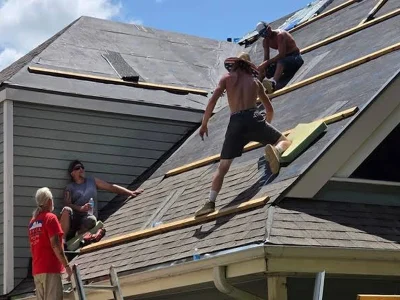
While it may be tempting to climb up and inspect your roof yourself, walking on your new roof can lead to unintended damage. Shingles can crack or become dislodged underfoot. Always call a roofing professional for inspections or repairs to avoid compromising the integrity of the materials.
6. Check Attic Ventilation and Insulation
Good attic ventilation and insulation play a vital role in maintaining your roof’s health. Poor ventilation can cause heat and moisture buildup, which may lead to premature roof aging or mold issues. Ensure that your attic is properly ventilated to allow airflow and minimize moisture accumulation.
Conclusion
Your new roof is a significant investment-protect it with proactive maintenance and professional care. By following these simple steps, you can extend the life of your roof and avoid unexpected repair costs down the line.
Is it time for your first post-replacement roof inspection? Contact FRG today for a thorough check-up and ongoing roof maintenance services. Let our roofing experts help you preserve your investment for years to come!
This post was written by the team at FRG. With over 30 years of combined experience, FRG is a trusted Roofing Replacement Company St Louis MO homeowners and businesses rely on. Specializing in roof repairs, replacements, and storm damage restoration, our in-house, factory-certified experts deliver high-quality workmanship and personalized service on every project.


Comments