
 By
Drive east out of Livermore on a summer afternoon and the hills tell the story before any weather report does. By late June the grass has turned gold, the wind pours through the Altamont Pass most evenings, and a small roadside spark can turn into a running grass fire within minutes. Most of those fires never reach a neighborhood. When one does, it is rarely a wall of flame that threatens a house. It is the storm of glowing embers carried ahead of it.
That detail changes how a roof should be judged. Homeowners tend to focus on the covering itself, the shingles or tile or metal they can see from the street. Fire researchers, however, keep finding that houses with perfectly good roofing still ignite, because embers slip through the small openings around the edges, vents and joints that nobody thinks about until a red flag warning shows up.
So when a household starts comparing Livermore roofing services for a repair or full replacement, the more useful question is not only which material carries the best rating. It is how well the whole roof assembly, gaps included, keeps windblown embers out of the attic and away from the gutters.
Where the Fire Rating Stops
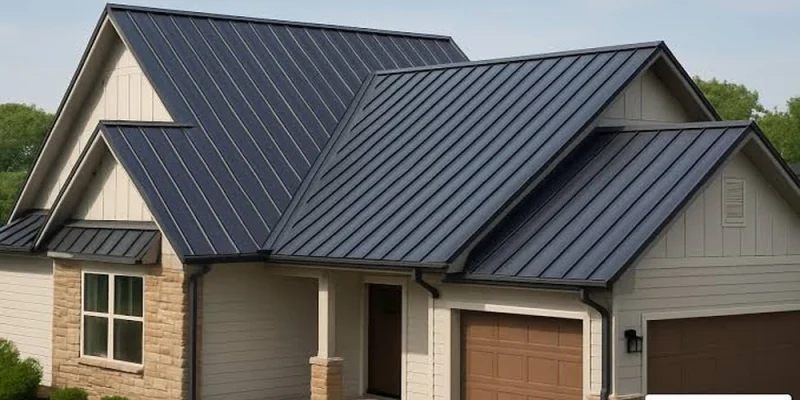
Roof coverings are tested and labeled Class A, B or C, with Class A offering the highest resistance to fire spreading across the surface. Asphalt composition shingles, clay and concrete tile and steel panels can all reach that level, and many homes in the Tri Valley already have it. Untreated wood shakes, still found on some older properties in the hills, are the major exception and are widely considered the first thing to replace.
The catch is that the rating describes the field of the roof, the broad flat expanse of shingles or tile. It says much less about the transitions, openings and accessories that interrupt that surface. Federal wildfire preparedness guidance from Ready.gov encourages homeowners to prepare the whole property, using fire resistant materials when building or remodeling and keeping debris away from the house. A Class A covering paired with an open vent or a gutter full of dry leaves is not a Class A roof in any practical sense.
Five Places Embers Find Their Way In
1. Attic and Soffit Vents
Attics need airflow, and that airflow is an open invitation. Embers ride the same wind that drives ventilation, especially through gable end vents and openings under the eaves. Ember and flame resistant vents, or metal mesh with openings no larger than 1/8 inch, block most of that traffic. Vinyl vent covers are a weak point because they can soften and deform in high heat.
2. Gutters Full of Dry Debris
A gutter packed with oak leaves and pine needles is a ready made fuel bed sitting right against the roof edge. Embers that land there can ignite the debris and push flame up under the first course of shingles. Metal gutters, a metal drip edge and simple seasonal cleaning do more here than any upgrade to the roof covering.
3. Open Tile Ends
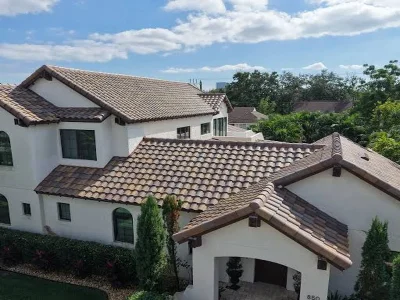
Barrel tile roofs are popular across the East Bay, and the curved ends at the eave line leave small tunnels. Birds and rodents love to nest in them, and nesting material burns readily. Bird stops or eave closures seal those openings, solving a pest problem and a fire problem in one step.
4. Roof to Wall Intersections
Wherever a lower roof meets a taller wall, such as at a dormer, a second story setback or a porch roof tied into siding, debris collects and embers settle. If the siding there is wood, the risk climbs. Noncombustible flashing that extends up the wall, plus a clear gap between roofing and siding, keeps that corner from becoming an ignition point.
5. Ridge and Specialty Vents
Standard ridge vents were designed to shed rain and move air, not to stop burning particles. Products built and tested to resist ember entry exist, and swapping them in during a reroof costs little compared to the protection they add. Turbine vents and older power vents deserve the same scrutiny.
Repair, Retrofit or Replace
Not every house needs a new roof to become meaningfully safer. Many of the most important improvements are retrofits that can be handled on their own.
Vent upgrades, gutter guards, bird stops and edge flashing are relatively quick jobs. They suit roofs with plenty of service life left, particularly newer composition shingle roofs that already carry a Class A rating.
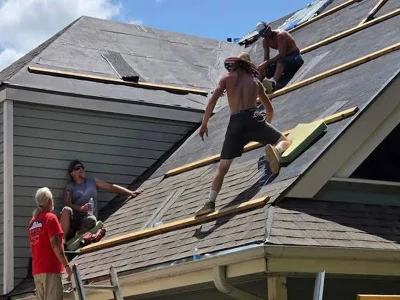
A full replacement makes more sense when the covering itself is the problem. Wood shakes, a roof near the end of its lifespan, or recurring leaks that point to failing underlayment all signal that patching around the edges will not be enough. A tear off also exposes the decking, which allows hidden rot, gaps along the eaves and outdated ventilation to be corrected before new material goes down.
Code plays a role as well. California applies stricter wildfire construction standards to homes in designated fire hazard severity zones, and the state’s updated maps have pulled more local neighborhoods into those categories. Homeowners near the southern and eastern edges of town should confirm their zone with the city before a project, because it can affect material choices, vent specifications and permit requirements.
Heat and Wind Still Count
Fire is not the only stress a Livermore roof faces. Summer afternoons regularly push past 95 degrees, and that steady heat ages asphalt shingles faster than the milder climate closer to the bay. Lighter colored or reflective materials reduce attic temperatures and slow that wear, which matters for both comfort and lifespan.
Wind is the other constant. The same gusts that carry embers also lift shingle edges over time, especially where nailing was rushed or sealant strips never bonded. A wind lifted tab is both a leak waiting for winter rain and a fresh gap for embers to slide under in fire season.
Looking at Your Own Roof
A homeowner can learn a lot from a slow walk around the house with binoculars. Check the vents for mesh size and material. Look into the gutters. Count any open tile ends along the eaves. Notice where lower roofs meet walls and what the siding is made of in those corners.
None of this requires climbing a ladder, and it often reveals that the biggest weaknesses are small, inexpensive fixes rather than a full reroof. In a valley ringed by dry grass and steady wind, those small gaps are where a roof’s real fire resistance is decided.


Comments